What Is MRP? Material Requirements Planning
What is MRP? Learn how material requirements planning turns demand and bills of materials into purchase and production orders, with a worked example and FAQs.
MRP, or material requirements planning, is a method for working out which materials you need, how many, and when, so you can make what customers ordered without running short or overbuying. It takes demand, your bills of materials and current stock, then proposes purchase orders and production orders with dates. In short, it answers three questions: what do we need, what do we have, and what must we order?
What MRP does
Imagine you make wooden desks. A customer orders fifty. Each desk needs a top, four legs, sixteen screws and a drawer unit. MRP multiplies the order by the bill of materials, subtracts what you already hold or have on order, and tells you what to buy or make, and by which date, given supplier lead times.
That sounds simple for one product. With dozens of products, shared components, several suppliers and changing orders, doing it by hand becomes unreliable. MRP does the calculation repeatedly and consistently.
The inputs MRP depends on
MRP is only as good as its data. Three inputs matter most.
- Demand. Confirmed sales orders and, if you use them, forecasts or minimum stock targets.
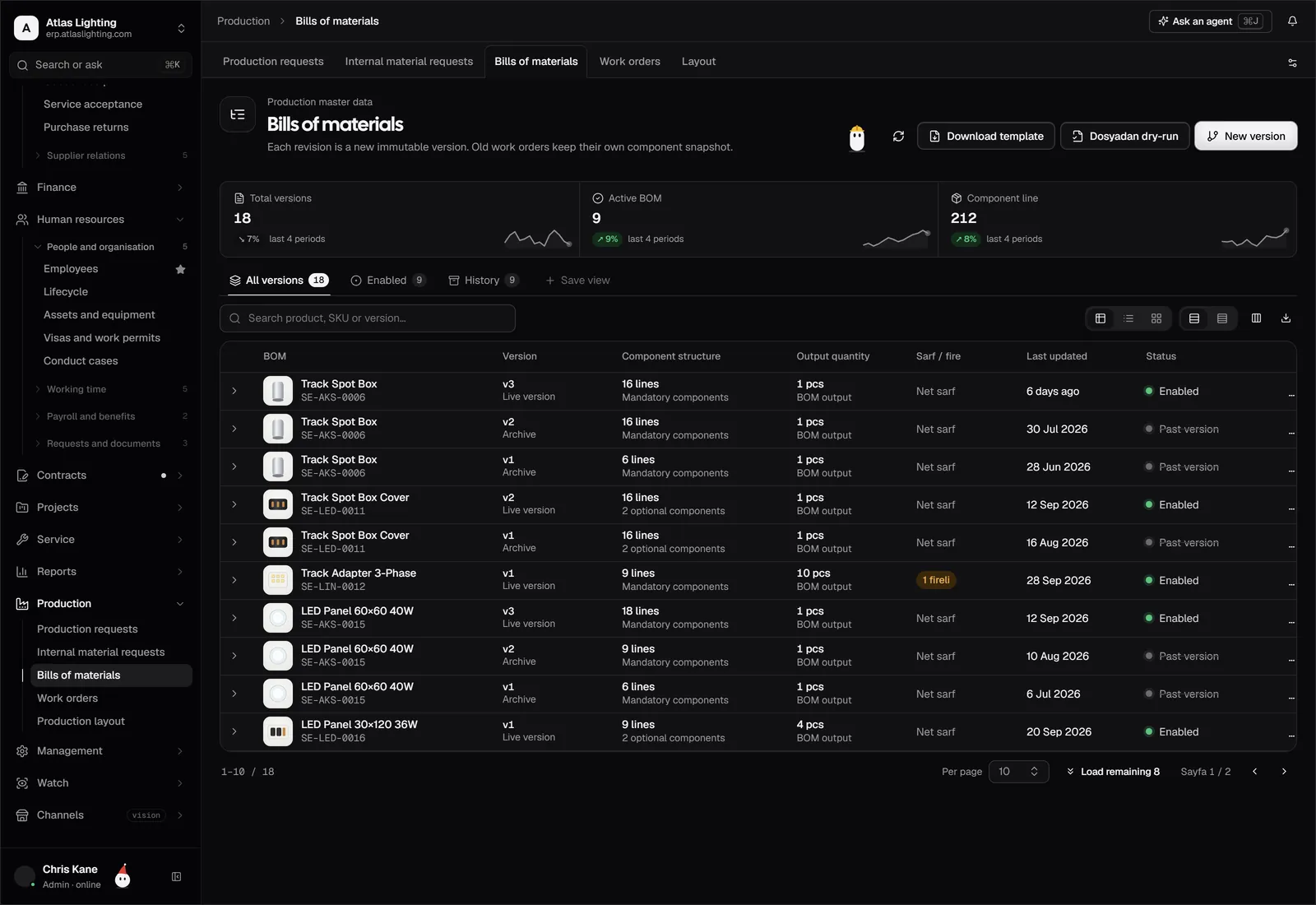
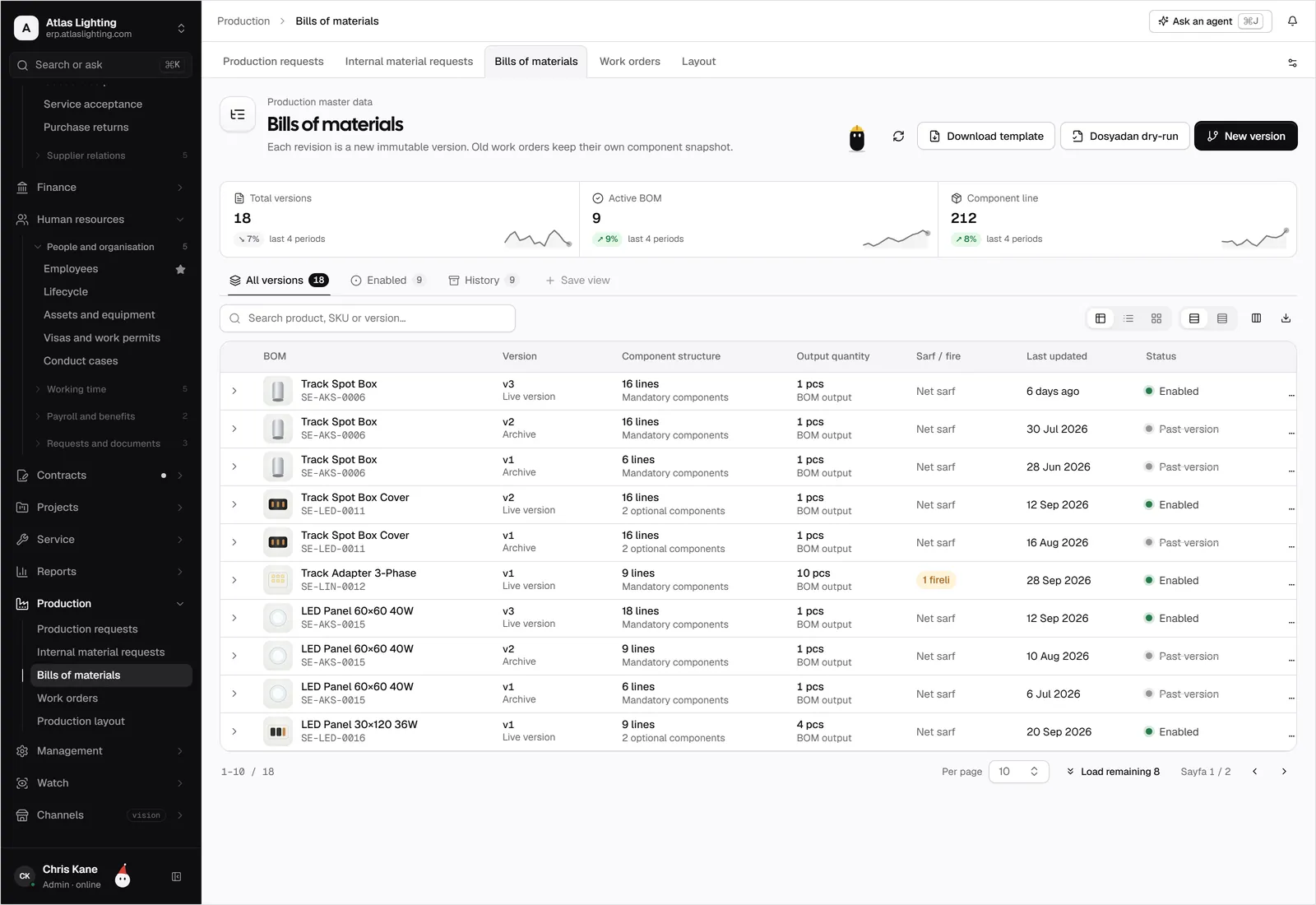
- Bill of materials (BOM). The list of components and quantities for each finished or semi-finished item, including sub-assemblies.
- Inventory status. On-hand stock, stock already allocated, open purchase orders and open production orders.
Supporting parameters include lead times, lot sizes, minimum order quantities, scrap or yield allowances and safety stock.
How the calculation works, step by step
- List the gross requirement for each item for each date.
- Subtract available stock and scheduled receipts to get the net requirement.
- Apply lot-size rules, such as order in multiples of a pack size.
- Offset by lead time to find when the order must be released.
- Explode the requirement down the BOM to components and repeat.
The output is a set of suggested actions: buy this, make that, expedite or postpone an existing order.
A small worked example
Suppose you need 100 units of a lamp in 30 days. Each lamp needs one shade, one base and one cable set. You have 20 lamps in stock, 40 shades, 100 bases and no cable sets.
| Item | Gross need | In stock | Net need |
|---|---|---|---|
| Lamp (finished) | 100 | 20 | 80 to build |
| Shade | 80 | 40 | 40 to buy |
| Base | 80 | 100 | 0 |
| Cable set | 80 | 0 | 80 to buy |
If cable sets take ten days to arrive and assembly takes three, MRP would suggest ordering cable sets at least thirteen days before the due date, ahead of the build. The numbers here are purely illustrative.
MRP, MRP II and ERP
You may see several related terms.
- MRP focuses on materials and timing.
- MRP II extends this to capacity: machines, labour and schedules.
- ERP includes MRP functions and connects them to sales, finance, HR and the rest of the business.
For manufacturers, MRP is often the first reason to move beyond spreadsheets, because it needs bills of materials, stock and purchasing to agree with each other.
When you need MRP
You probably need it when:
- Products have several components or sub-assemblies.
- Components are shared between products.
- Supplier lead times are long enough to cause delays.
- You often discover shortages after a job has started.
- You tie up too much cash in stock “just in case”.
If you make a very small range with simple builds, a disciplined spreadsheet and clear reorder points might do. Once complexity grows, manual planning breaks quietly.
Making MRP work in practice
- Fix the BOMs first. Wrong quantities or outdated components produce wrong orders.
- Keep stock accurate. MRP trusts the numbers. Cycle counts and barcode scanning help.
- Record real lead times. Use how long suppliers actually take, not what the website promises.
- Review suggestions, do not blindly accept them. A planner should check exceptions, such as large changes or unusual dates.
- Handle changes quickly. Urgent orders and cancellations should flow through to the plan.
- Start with a pilot product family. Prove the data and the process, then widen the scope.
Common mistakes
- Treating MRP as a one-time setup rather than an ongoing discipline.
- Setting overly large safety stocks that hide problems and consume cash.
- Not separating firm orders from forecasts, which can inflate purchases.
- Ignoring capacity. MRP can say what is needed, but a workshop that is already full cannot deliver it.
How Dika Ops approaches it
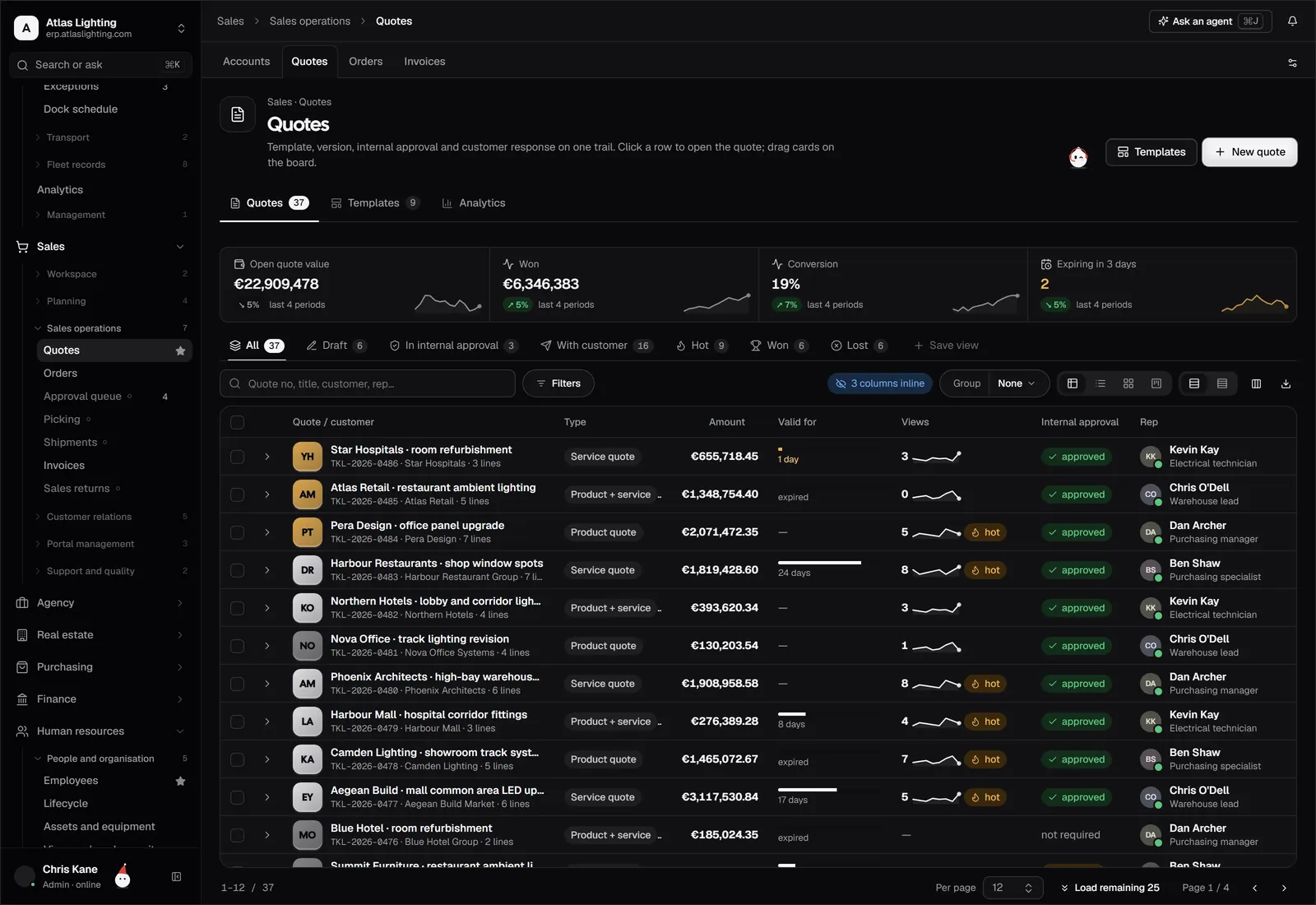
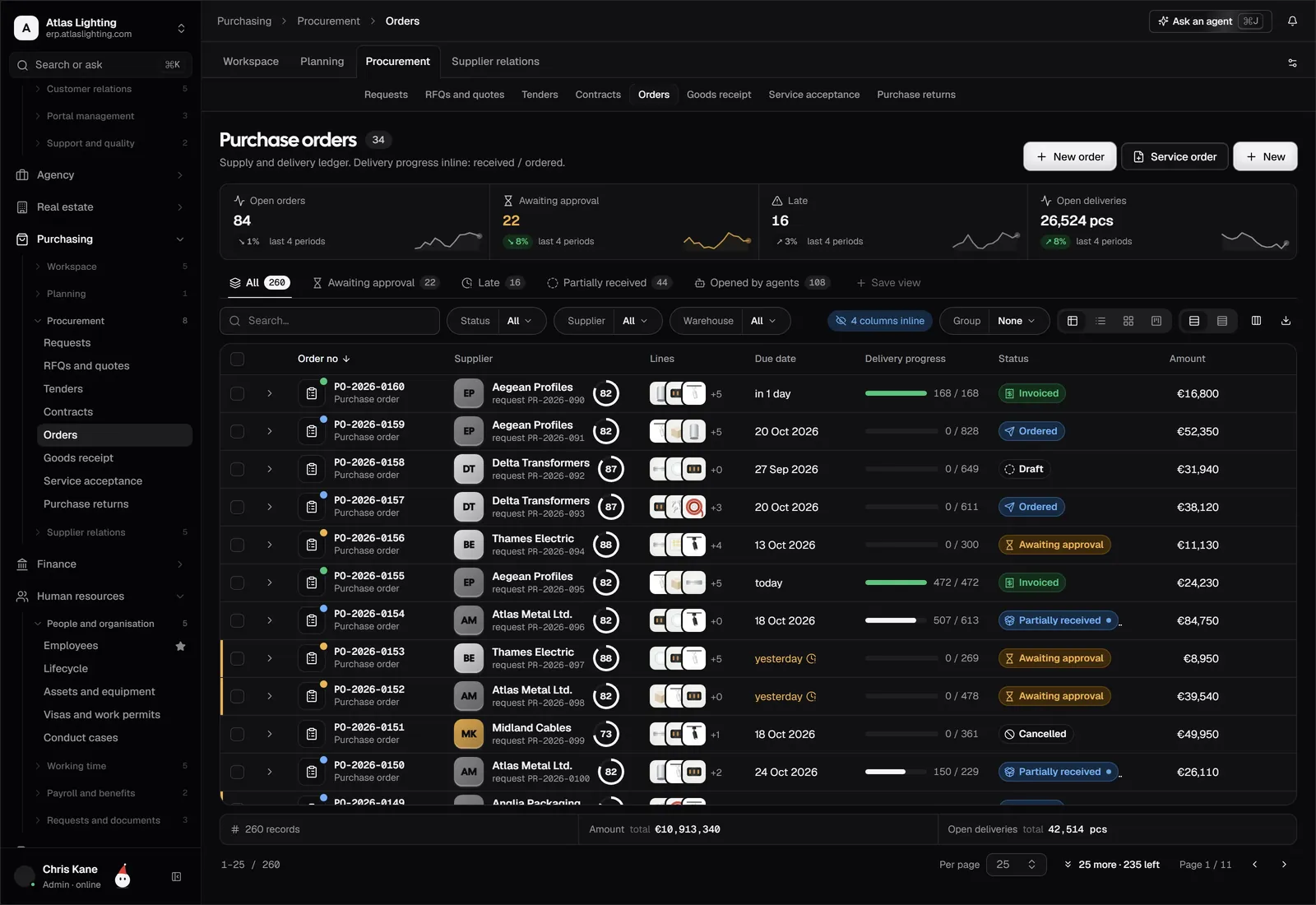
In Dika Ops, manufacturing works alongside inventory and purchasing, so demand, bills of materials, stock and supplier orders live in the same system. That is the foundation material planning needs. AI coworkers can draft routine purchasing work, with a person approving anything important.
FAQ
What is the difference between MRP and ERP?
MRP is a planning method focused on materials and timing. ERP is a wider system that includes MRP-style planning along with sales, purchasing, finance and other functions in one database.
Do small manufacturers need MRP?
If your products have multiple components and you suffer shortages or excess stock, yes, some form of material planning helps. The scale of tool can be modest, but the logic is the same.
What data do I need before starting MRP?
Accurate bills of materials, reliable stock records, realistic supplier lead times and clear rules for minimum order quantities. Cleaning these first saves most of the trouble later.
Does MRP replace a production planner?
No. It automates calculation and flags exceptions. A planner still decides priorities, handles capacity limits and resolves conflicts.
Next step
If you want planning, stock, purchasing and finance in one place, Dika Ops is built for that. It is in closed beta, and you can join the waitlist to be considered for early access.