Gross Margin vs Markup: How to Price Profitably
Gross margin vs markup explained with formulas and a conversion table, plus how to set prices, protect margin and avoid the common pricing mistakes.
Gross margin vs markup is one of the most common sources of pricing mistakes: margin is profit as a percentage of the selling price, while markup is profit as a percentage of cost. A 50% markup gives only a 33.3% margin. Mix them up and you can quote work that looks healthy on paper and loses money in practice.
This guide explains both, gives you the formulas and a conversion table, and then walks through how to set prices and defend your margin as costs and discounts move.
Margin and markup defined
Both measures start with the same two numbers: what the item costs you and what you sell it for.
- Gross profit = selling price − cost of goods sold (COGS)
- Gross margin % = gross profit ÷ selling price × 100
- Markup % = gross profit ÷ cost × 100
Take a product that costs £60 and sells for £100. Gross profit is £40. The margin is 40 ÷ 100 = 40%. The markup is 40 ÷ 60 = 66.7%. Same product, same profit, two different percentages, and the markup is always the larger figure.
Why the difference matters
Suppose your target is a 40% gross margin and a colleague hears “40%” and adds 40% on top of cost. A £60 item then sells at £84, giving a margin of only 28.6%. Across a year of orders, that gap can be the difference between covering your overheads and not.
The mix-up usually appears in three places:
- Quotes built from a cost-plus rule of thumb.
- Customer-specific price agreements where discounts are quoted as a percentage off list.
- Reports where one team shows margin and another shows markup under the same label.
Pick one measure for internal reporting (most finance teams use margin) and label it clearly everywhere.
Conversion table
Use this to translate between the two. To go from margin to the markup you need, divide margin by (1 − margin).
| Target gross margin | Required markup on cost | Price on a £100 cost |
|---|---|---|
| 20% | 25.0% | £125.00 |
| 25% | 33.3% | £133.33 |
| 30% | 42.9% | £142.86 |
| 40% | 66.7% | £166.67 |
| 50% | 100.0% | £200.00 |
The price formula for a target margin is simple: price = cost ÷ (1 − target margin). For a £100 cost and a 40% margin, that is 100 ÷ 0.6 = £166.67.
What goes into cost
A margin is only as honest as the cost behind it. Be clear about what you include:
- Purchase price of materials or goods, net of any supplier rebate you can rely on.
- Landed costs such as freight, duty and handling that arrive with the goods.
- Direct labour and machine time for anything you make or assemble.
- Scrap and rework allowances if they are a regular occurrence.
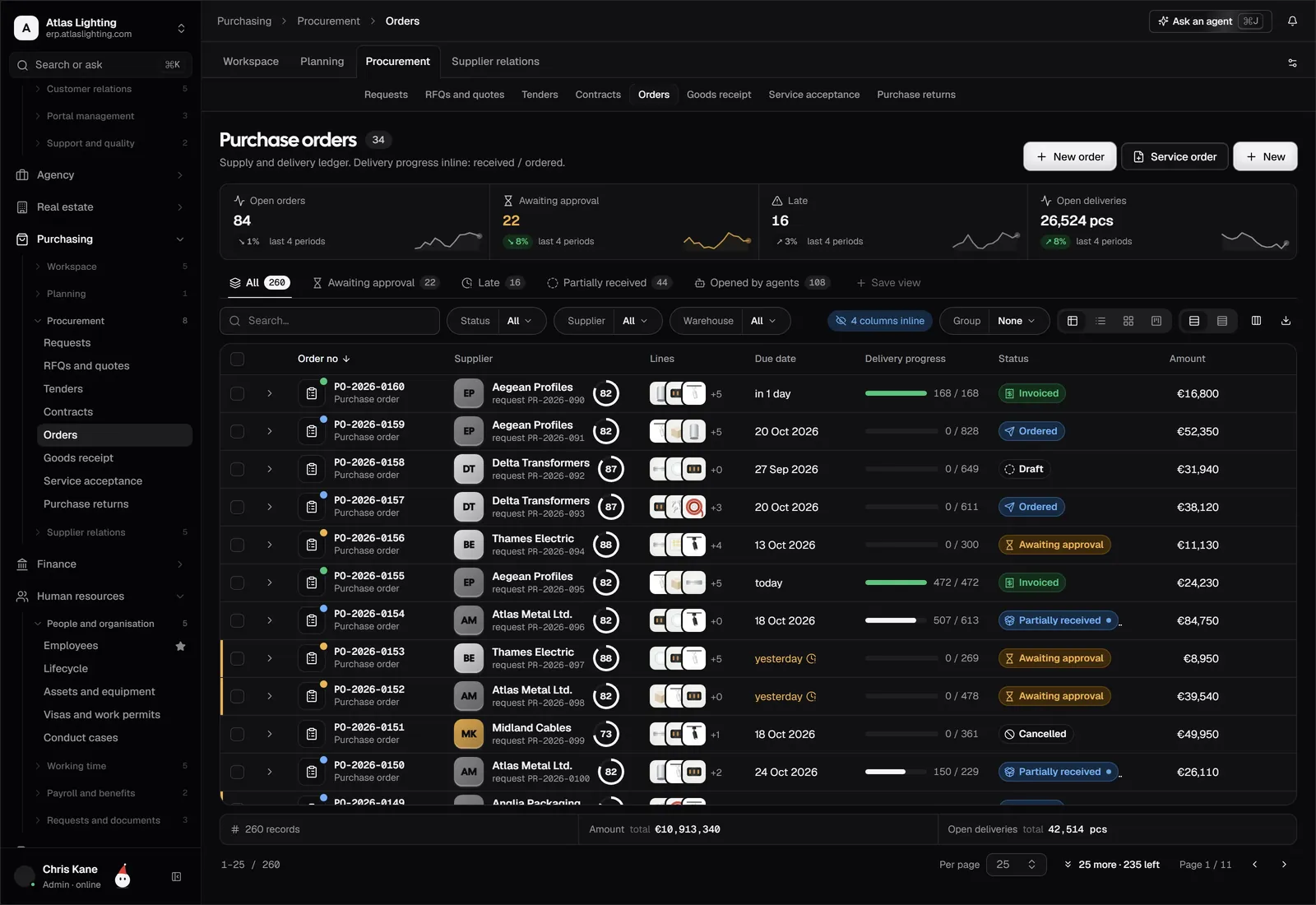
Overheads such as rent and admin salaries are normally covered by gross profit rather than included in COGS, which is why gross margin must be comfortably higher than the net margin you hope to earn. If you manufacture, accurate costing depends on up-to-date bills of materials; see how manufacturing records tie material and labour to each product.
How to set prices
There are three common approaches, and most businesses blend them.
Cost-plus pricing
Start from cost and apply the required margin. It is quick, transparent and protects profit, but it ignores what customers will pay. It works well for custom or one-off jobs.
Market-based pricing
Look at what competitors and alternatives charge, and position yourself against them. This keeps you realistic, but you still need to check the resulting margin against your cost. If the market price gives you an unacceptable margin, the answer is a cost, mix or positioning change, not hoping.
Value-based pricing
Price according to the value the customer gets, such as faster delivery, expertise or reliability. It can lift margin, but it needs real evidence of that value and a sales conversation to match.
Protecting margin day to day
Margin rarely collapses in one go. It leaks:
- Discount creep. Small concessions to win an order become the new normal. Set discount limits by role and require approval beyond them.
- Stale costs. Supplier prices change; your list prices do not. Review costs whenever you receive a new supplier price, not once a year.
- Hidden costs. Free shipping, rush fees absorbed, extra revisions. Record them against the order so you can see the real margin.
- Currency and surcharges. If you buy in one currency and sell in another, build in a buffer or review prices on a schedule.
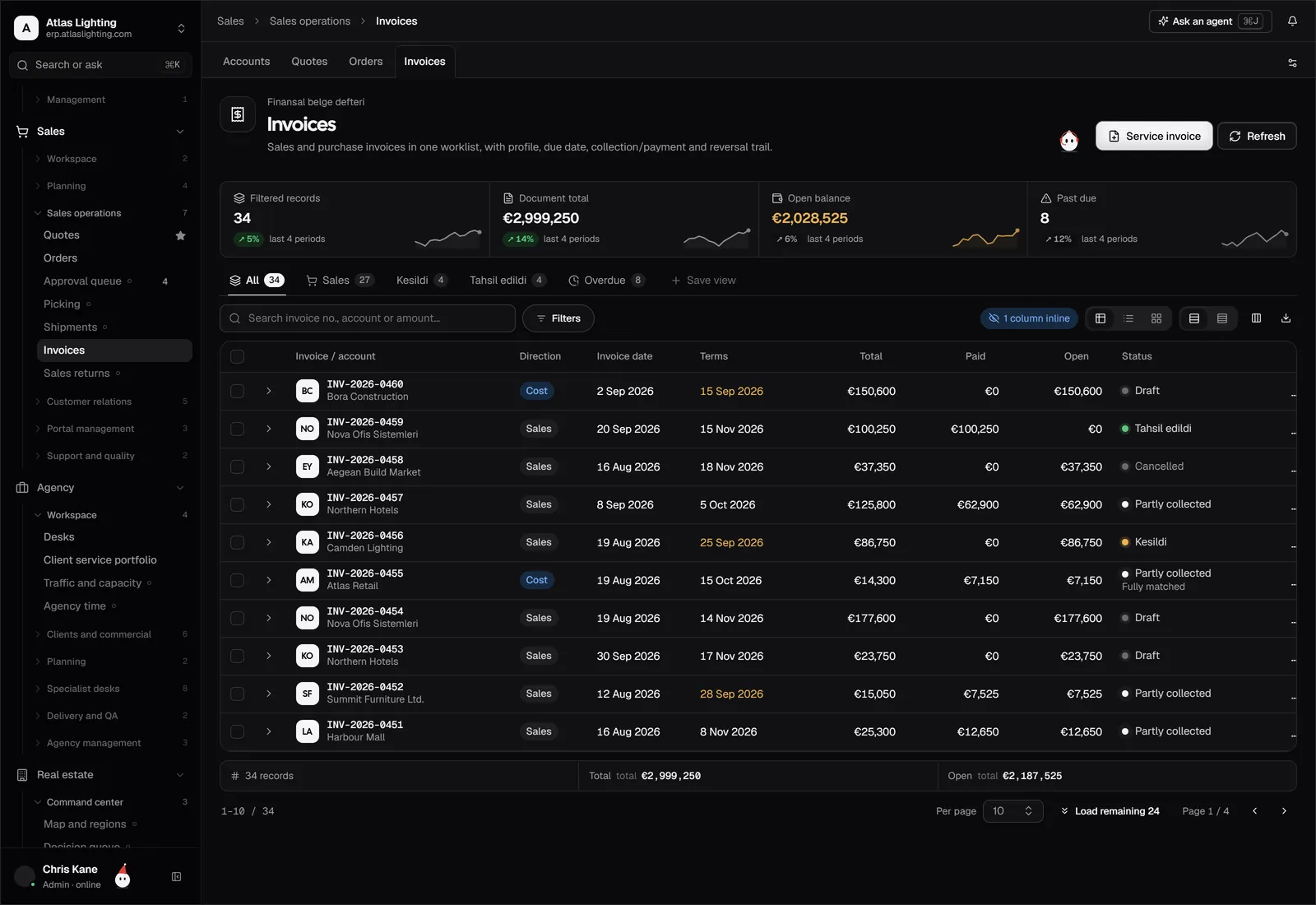
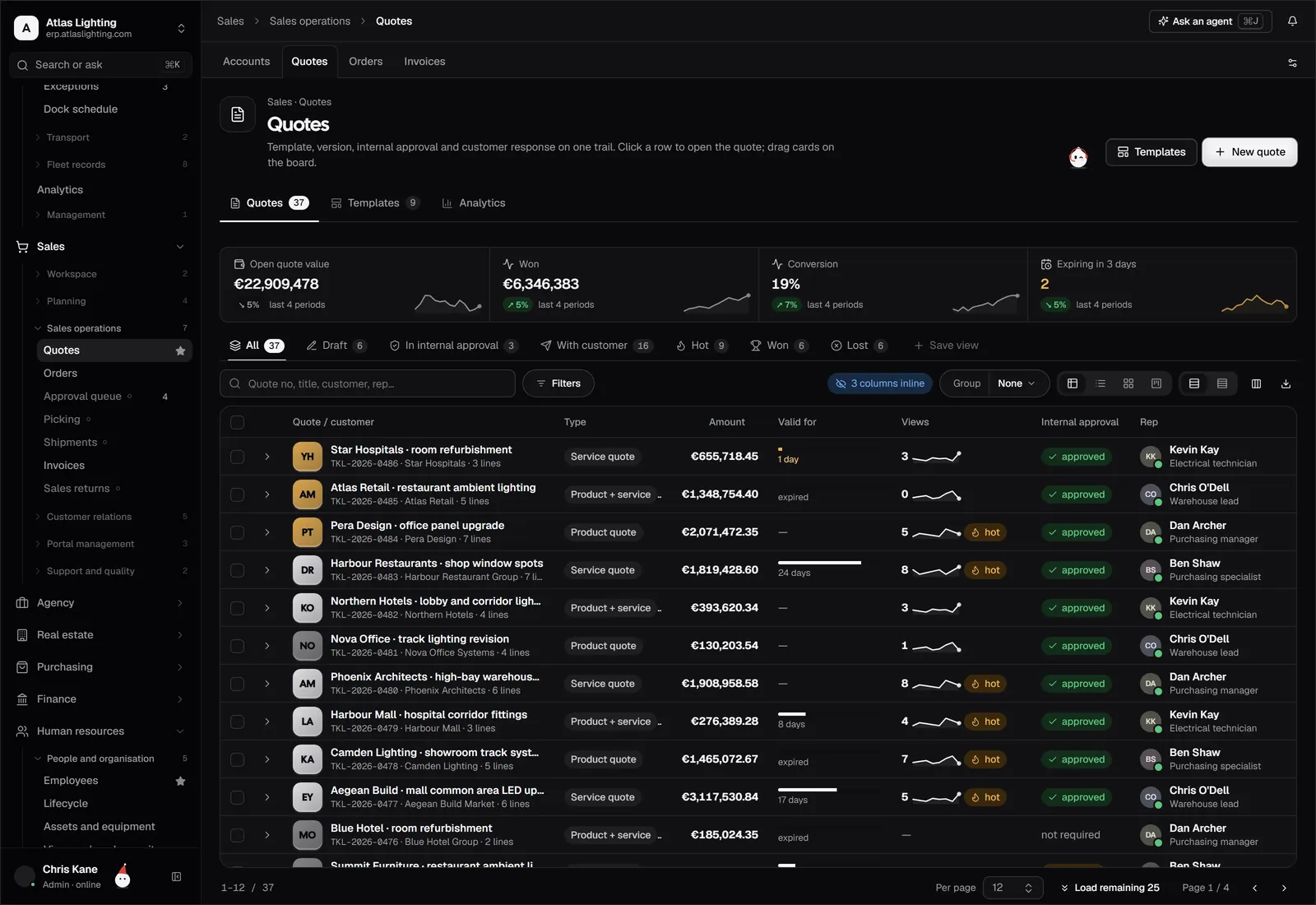
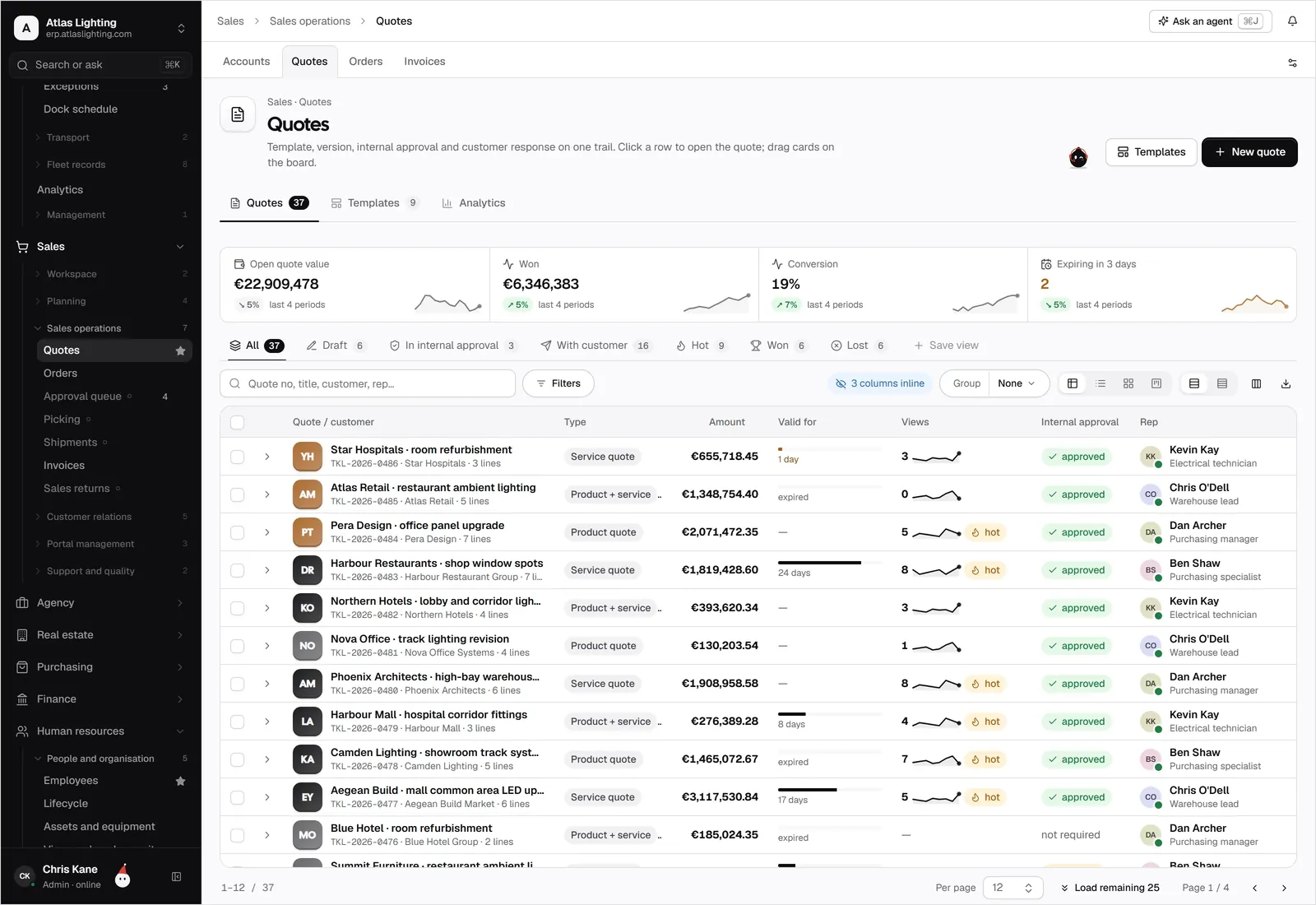
A useful habit is to calculate margin at the quote stage, not after the invoice. When a salesperson can see the margin as they build a quote in sales, they negotiate with a floor in mind. Where a discount takes margin below your threshold, route it for approval rather than relying on memory.
Review margin by more than one lens
The company-wide figure can look fine while parts of the business lose money. Look at gross margin by:
- Product or product family
- Customer or customer group
- Sales channel
- Salesperson or region
Margin by customer is often the eye-opener: a large account with generous terms can be less profitable than several smaller ones. Pair this with inventory valuation so cost of goods sold reflects the stock you actually used, not an estimate.
FAQ
Is gross margin the same as profit margin?
No. Gross margin only subtracts direct costs of goods sold. Net profit margin also subtracts overheads, interest and tax, so it is always lower.
What is a good gross margin for a small business?
It depends heavily on sector. Distribution typically runs on thinner margins than manufacturing or services, so compare against your own history and similar businesses rather than a universal number.
Should I quote using margin or markup?
Use whichever your team will apply correctly, but report margin internally so figures are comparable. If staff think in markup, give them a conversion table or let the quoting tool do the arithmetic.
How often should I review my prices?
Whenever a significant cost changes and at least once or twice a year. Fast-moving input costs justify a more frequent check.
Keep margin visible
Dika Ops is an AI-native ERP that connects quotes, purchasing costs, stock and invoicing, so margin is calculated from real records rather than guesswork. It is in closed beta; join the waitlist if you would like early access.