Production Planning: A Practical Guide
Production planning matches demand, materials and capacity so jobs finish on time. Learn the steps, key inputs and common mistakes for small manufacturers.
Production planning is the process of deciding what to make, how much, when and with which materials and machines, so that you meet customer demand without tying up cash in excess stock. Done well, it means fewer rush jobs, fewer material shortages and more reliable delivery dates.
This guide explains the core steps, the information you need, and the mistakes that cause most small manufacturers to fall behind.
What production planning involves
Production planning sits between sales and the shop floor. Sales tells you what customers want and when. The shop floor tells you what is physically possible. Planning reconciles the two.
In practice it answers four questions:
- What do we need to produce?
- How much of it, and by when?
- What materials are required, and do we have them?
- Do we have the capacity (people, machines, time) to do it?
If any answer is “we don’t know”, the plan is a guess.
Production planning vs production scheduling
The terms overlap but are not identical. Planning is the broader, forward-looking view: quantities, materials and capacity over weeks or months. Scheduling is the detailed sequencing: which job runs on which machine at which time. You need the plan first, because a precise schedule built on wrong quantities or missing materials will fall apart by Tuesday.
The inputs you need
Reliable plans rest on reliable data. Gather these before you start:
- Demand: confirmed customer orders and a realistic forecast for repeat items.
- Bill of materials (BOM): the list of components, quantities and sub-assemblies for each product.
- Routings: the steps and work centres each product passes through, with time per step.
- Stock on hand and on order: finished goods, components and raw materials.
- Capacity: available labour and machine hours, including maintenance and holidays.
- Lead times: how long suppliers take to deliver materials.
A bill of materials that is out of date is one of the most common reasons plans fail. If the BOM says a part needs 2 screws but the floor uses 3, every material calculation is wrong.
A step-by-step production planning process
1. Collect demand
Combine customer orders, scheduled deliveries and a sensible forecast. Separate firm orders from estimates so you know which part of the plan is certain.
2. Check what you already have
Subtract finished goods in stock from demand to get the net quantity to produce. Include items already in production so you do not double-plan.
3. Explode the BOM
For each product to be made, multiply the required quantity by the BOM to calculate the components needed. Compare against stock and open purchase orders to find shortages.
4. Order what is missing
Turn shortages into purchase requests, working back from the date you need the material minus supplier lead time. This is where planning and purchasing must stay connected.
5. Check capacity
Convert the quantities into hours at each work centre. If a machine is overloaded in one week, you can move work earlier, add a shift, subcontract or agree a later date with the customer.
6. Release work orders
Issue work orders to the floor with quantities, materials, due dates and routing steps.
7. Track and adjust
Compare progress with the plan daily or weekly. Something will always change: a late delivery, a machine breakdown, a rush order. A good plan is one you can revise quickly.
Common planning approaches
Different businesses suit different strategies.
| Approach | How it works | Suits |
|---|---|---|
| Make to stock | Produce based on forecast, sell from inventory | Standard products with steady demand |
| Make to order | Produce only after a customer order | Custom or high-value items |
| Assemble to order | Hold components, assemble when ordered | Configurable products |
| Batch production | Make fixed quantities in runs | Food, chemicals, repeated parts |
Many companies mix these. A manufacturer might keep stock of best sellers and build special orders to order.
Common production planning mistakes
- Planning on a wrong BOM. Small differences multiply across a run.
- Ignoring supplier lead times. The plan says Monday, the material arrives Friday.
- Assuming 100% capacity. Machines break down and people are absent. Plan for realistic availability.
- Freezing nothing. If the plan changes every hour, the floor stops trusting it. Agree a short frozen window.
- Disconnected tools. Orders in one system, stock in another and the schedule on a whiteboard means constant re-checking.
- No feedback loop. If actual times and scrap are never recorded, estimates never improve.
Why connected data matters
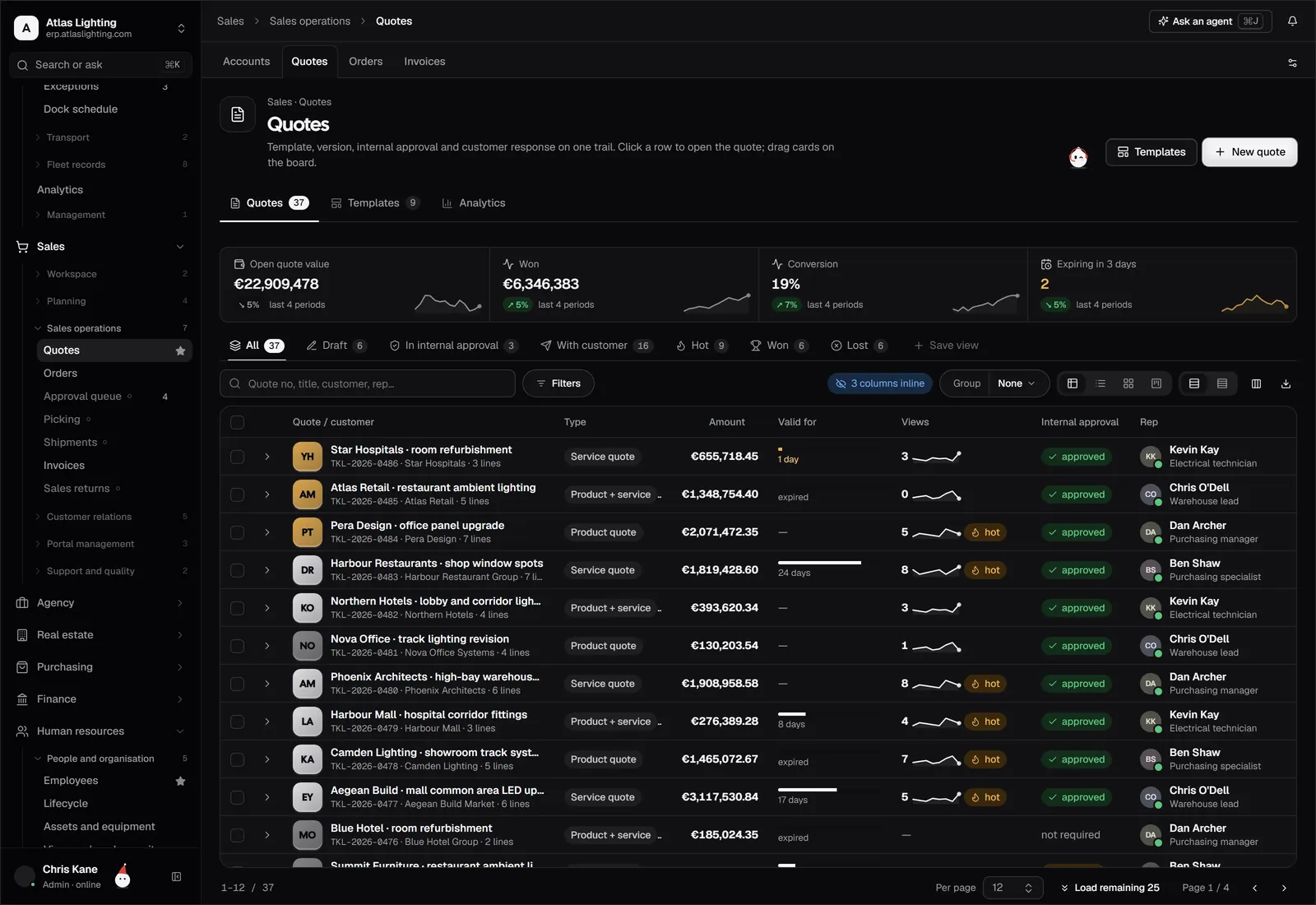
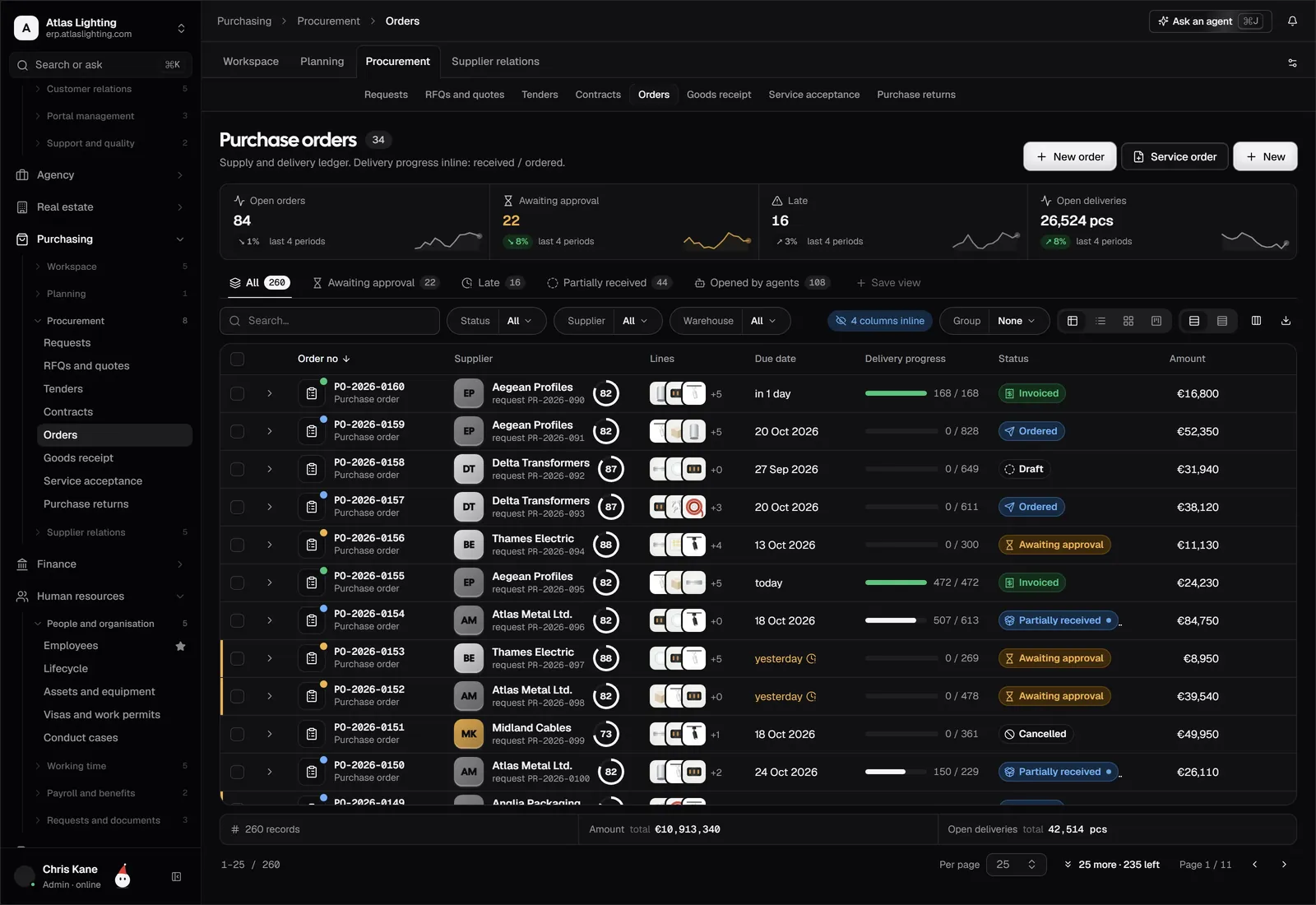
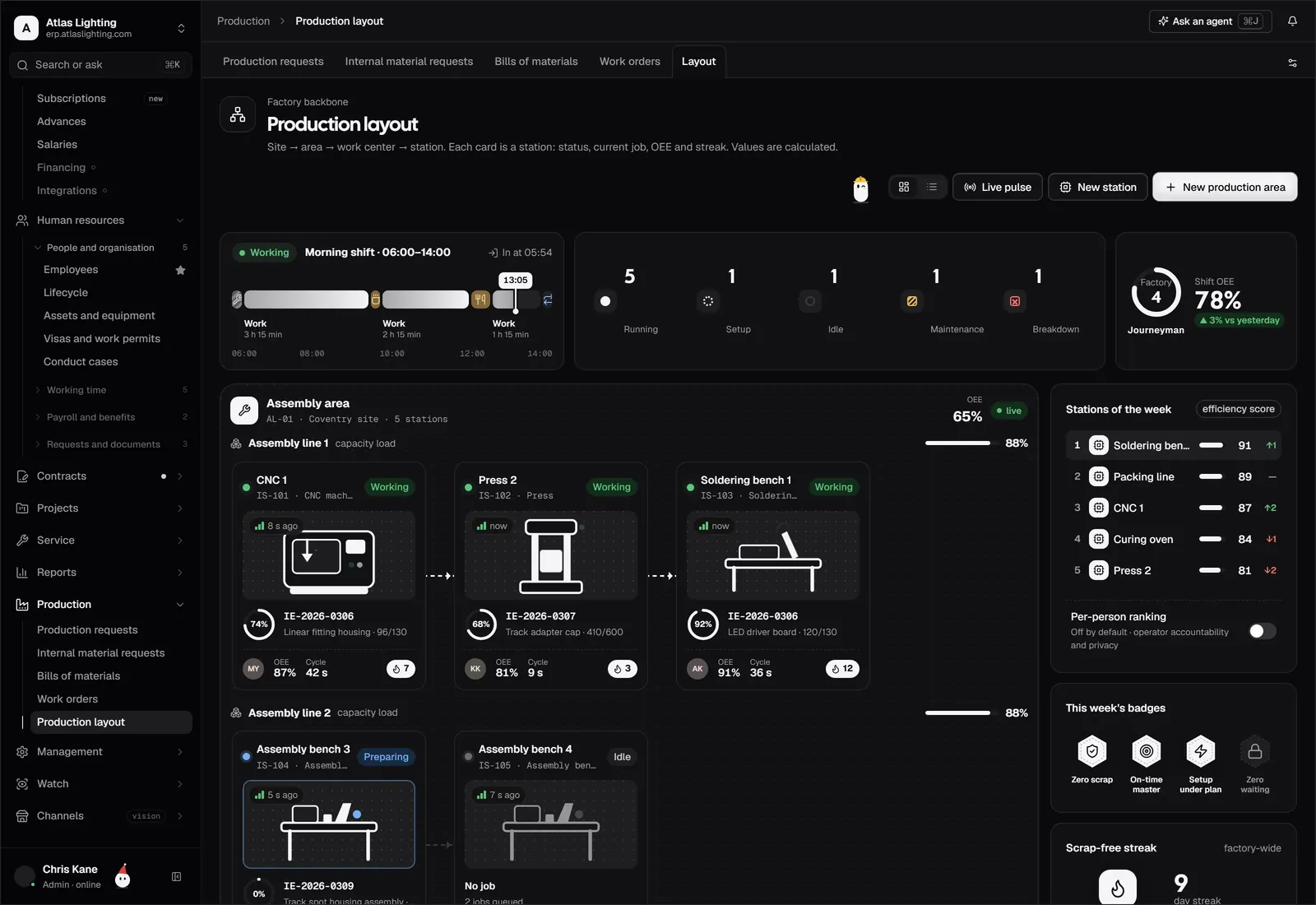
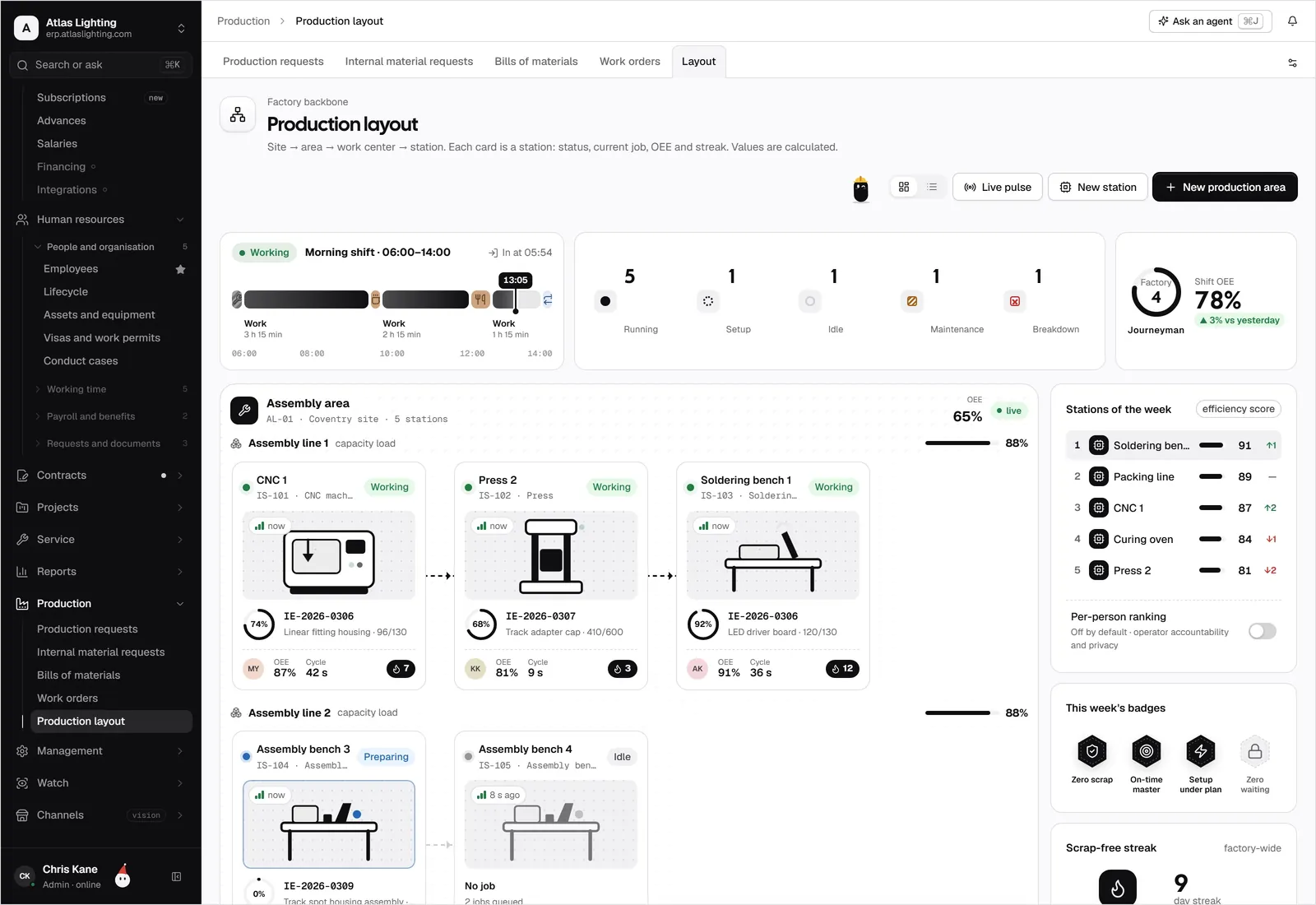
Production planning touches sales, inventory, purchasing and the shop floor. When these live in separate files, planners spend their time chasing information rather than planning. An integrated system lets a confirmed order create demand, shows component availability from live inventory, and generates work orders and purchase requests from the same data. In Dika Ops these functions sit in one place, and AI coworkers can flag shortages or late jobs while leaving decisions to your team.
Measuring whether planning is working
You do not need dozens of metrics. Start with a few:
- On-time delivery rate
- Number of rush orders per month
- Material shortages that stopped a job
- Difference between planned and actual production time
If these improve over a few months, your planning is getting better.
FAQ
What is the first step in production planning?
Start with demand: know exactly what customers have ordered and what you expect to sell. Everything else, from materials to capacity, flows from that number.
Do small manufacturers need production planning software?
Spreadsheets work at very low volume. Once you have multiple products, shared materials or several jobs running at once, software that links the BOM, stock and orders saves time and reduces shortages.
What is the difference between MRP and production planning?
Material requirements planning (MRP) is a method inside production planning that calculates which materials to buy and when, based on demand, BOMs and stock. Production planning is the wider process that also considers capacity and scheduling.
How far ahead should I plan?
It depends on lead times. Plan at least as far ahead as your longest material lead time, and review weekly.
Next step
Production planning is easier when orders, stock, purchasing and work orders share one source of truth. Dika Ops brings them together and is currently in closed beta. You can join the waitlist to be considered for early access.