Inventory Management Methods Explained
Compare the main inventory management methods, from FIFO and ABC analysis to reorder points and cycle counts, and pick the right mix for your business.
The main inventory management methods are ABC analysis, reorder points, safety stock, FIFO and FEFO rotation, cycle counting and just-in-time replenishment. Most small and mid-size businesses use a blend of them rather than a single method. This guide explains what each does, when it fits and how to combine them without drowning in admin.
Why the method matters
Stock is cash sitting on a shelf. Too much of it ties up money, takes up space and risks going obsolete. Too little causes stock-outs, late orders and unhappy customers. The goal of any method is to hold the right quantity of the right items at the right time, at a reasonable cost of effort.
The core methods
ABC analysis
ABC analysis ranks items by how much value they represent, usually annual usage multiplied by unit cost. A common approach is:
- A items: a small share of products that account for most of the value. Control them tightly.
- B items: moderate value and moderate attention.
- C items: many low-value items. Keep control simple.
The exact percentages are a rule of thumb, not a law, so adjust them to your range. The point is to spend your counting and ordering effort where it matters most.
Reorder point and reorder quantity
A reorder point is the stock level that triggers a new order. A simple formula is:
Reorder point = average daily usage × supplier lead time + safety stock
If you use 20 units a day, your supplier takes 10 days and you want a buffer of 40 units, your reorder point is 240 units. The reorder quantity is how much you then order, which depends on supplier minimums, storage space and price breaks.
Safety stock
Safety stock is the buffer that protects you from demand spikes and late deliveries. Set it using how variable your demand and lead times actually are, not a flat guess. Review it regularly, because suppliers and seasons change.
FIFO, FEFO and LIFO
These are rules for which stock leaves first.
| Rule | Meaning | Best for |
|---|---|---|
| FIFO | First in, first out | Most goods, especially those that age |
| FEFO | First expired, first out | Food, chemicals, anything with an expiry date |
| LIFO | Last in, first out | Rare in physical handling; check the accounting rules that apply to you before using it for valuation |
Physical rotation and accounting valuation are separate questions. Ask your accountant which valuation method applies to your business.
Cycle counting
Instead of shutting down for an annual stocktake, cycle counting checks a small set of items every day or week. Count A items more often and C items less often. Over time you catch errors early, find the cause of discrepancies and keep records reliable without halting operations.
Just-in-time replenishment
Just-in-time (JIT) aims to receive goods only when needed, reducing holding costs. It works best with dependable suppliers and short lead times. For businesses with unreliable supply, a pure JIT approach is risky, so combine it with some safety stock on critical items.
Min-max and two-bin systems
Min-max sets a minimum level that triggers an order and a maximum you refill to. Two-bin systems use two containers: when the first is empty, reorder while you use the second. Both are simple and suit low-value, high-volume items such as fasteners or packaging.
How to choose a combination
Start with your product range and your biggest problems:
- Classify items with ABC analysis. This tells you where to focus.
- Set reorder points for A and B items. Base them on real usage and lead times.
- Use simple min-max or two-bin rules for C items.
- Apply FEFO where expiry matters. Otherwise FIFO is usually enough.
- Introduce cycle counting. Start with your A items.
- Review quarterly. Demand, suppliers and prices drift over time.
Why accuracy comes before everything
No method works if the numbers are wrong. If the system says you have 50 units and the shelf holds 30, your reorder point never triggers on time. The basics of accuracy are:
- Record every receipt, issue, transfer and adjustment at the time it happens.
- Use clear locations and unique item codes.
- Investigate discrepancies instead of simply correcting them.
- Limit who can adjust stock, and keep a log of adjustments.
Where software helps
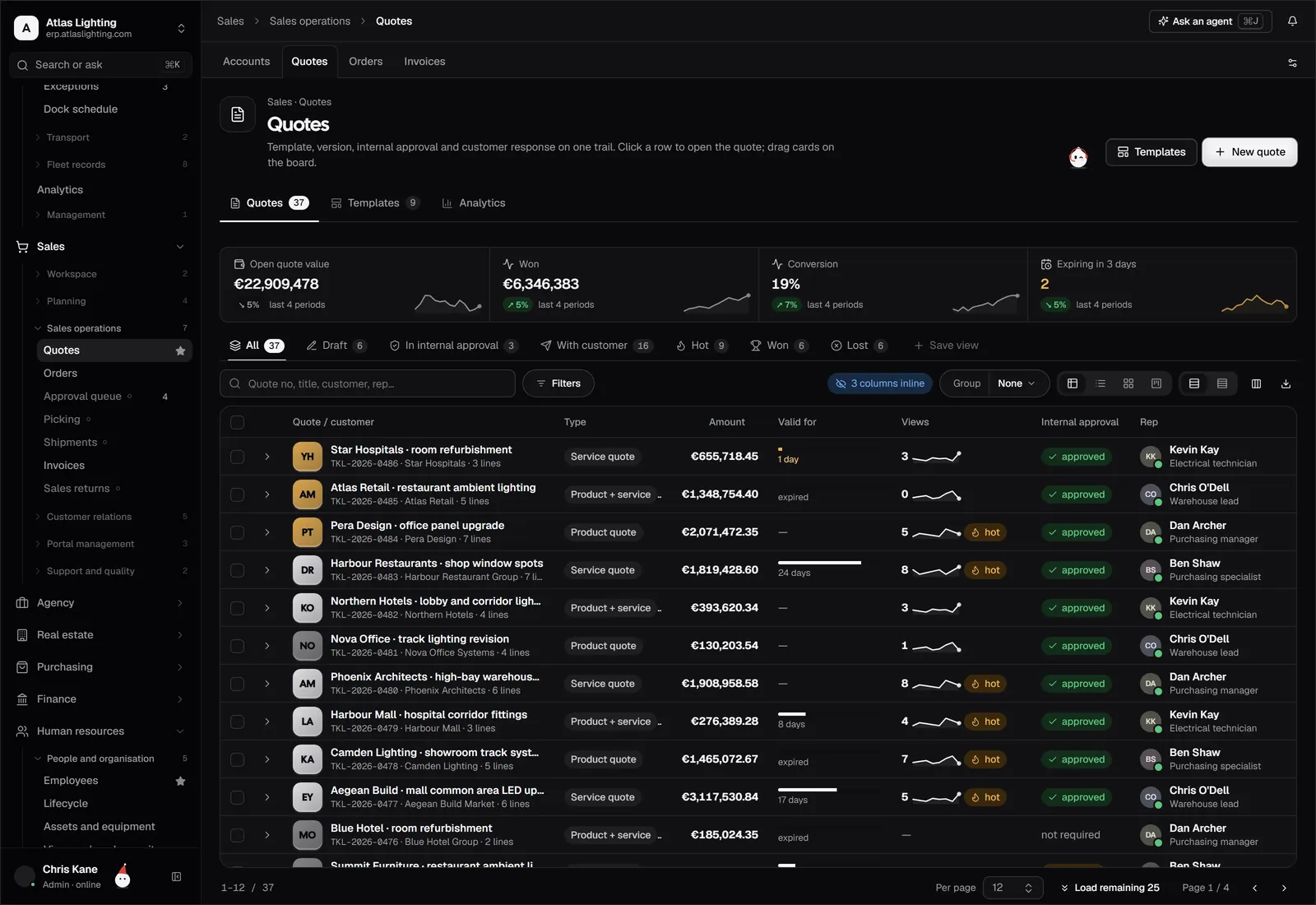
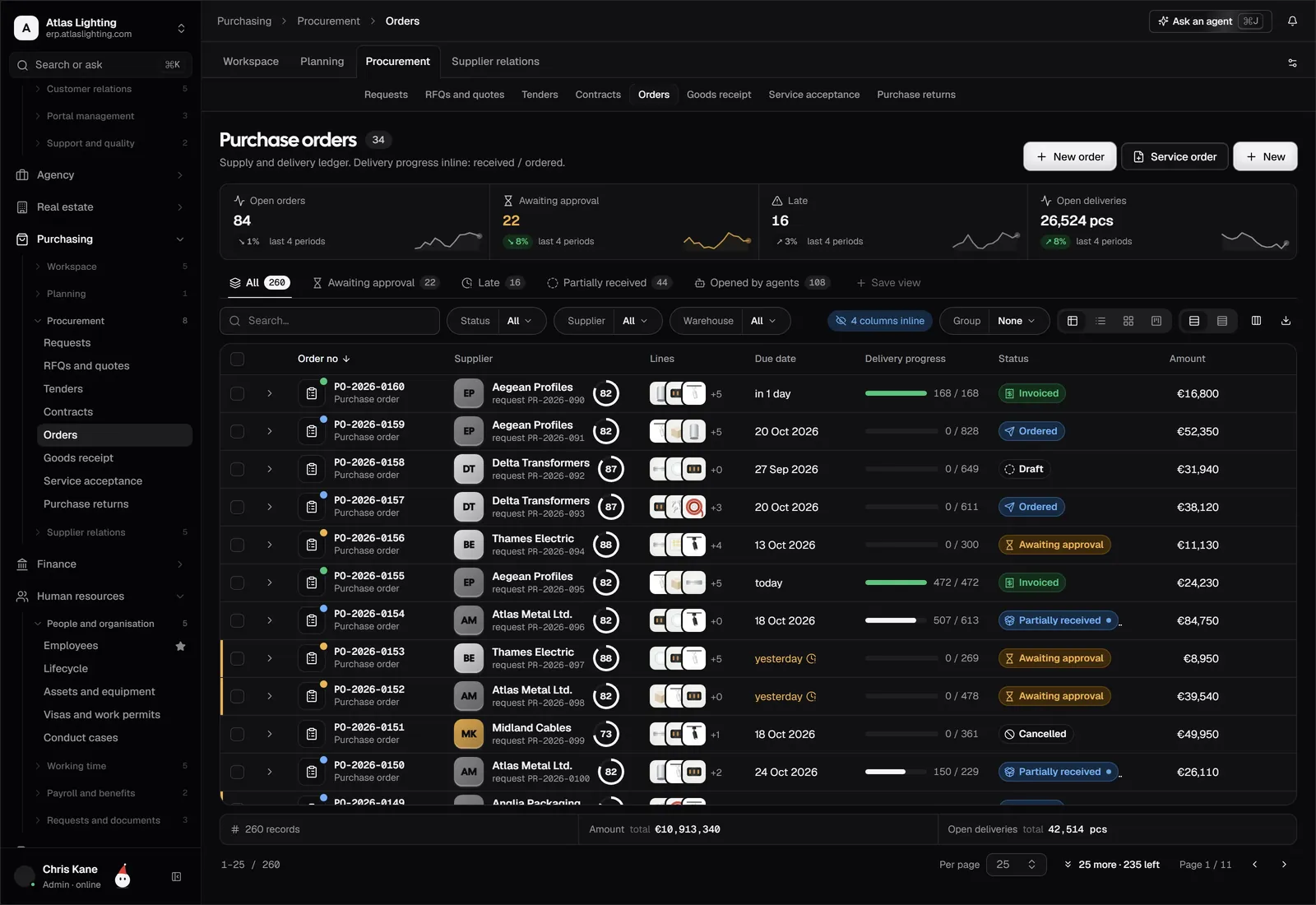
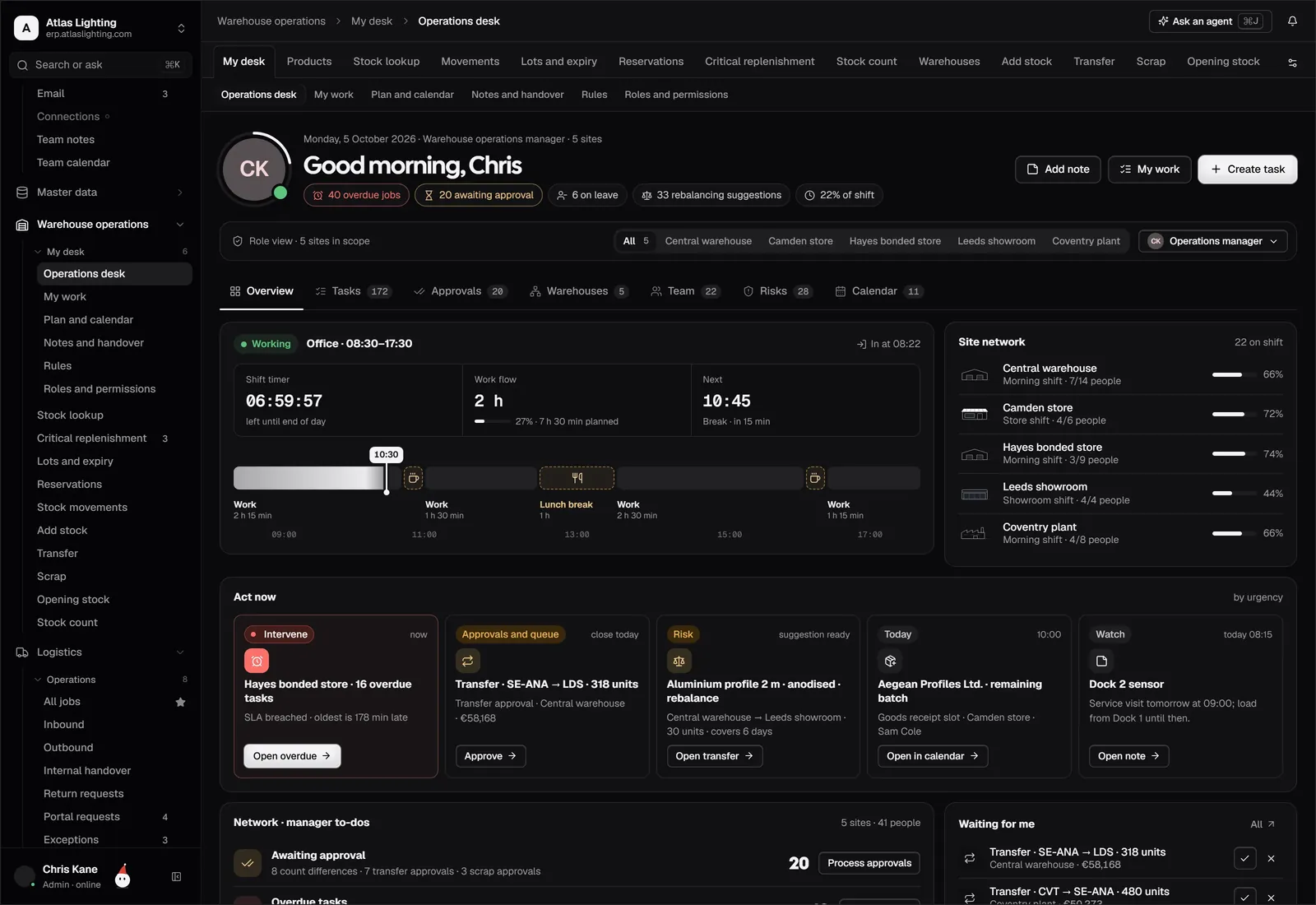
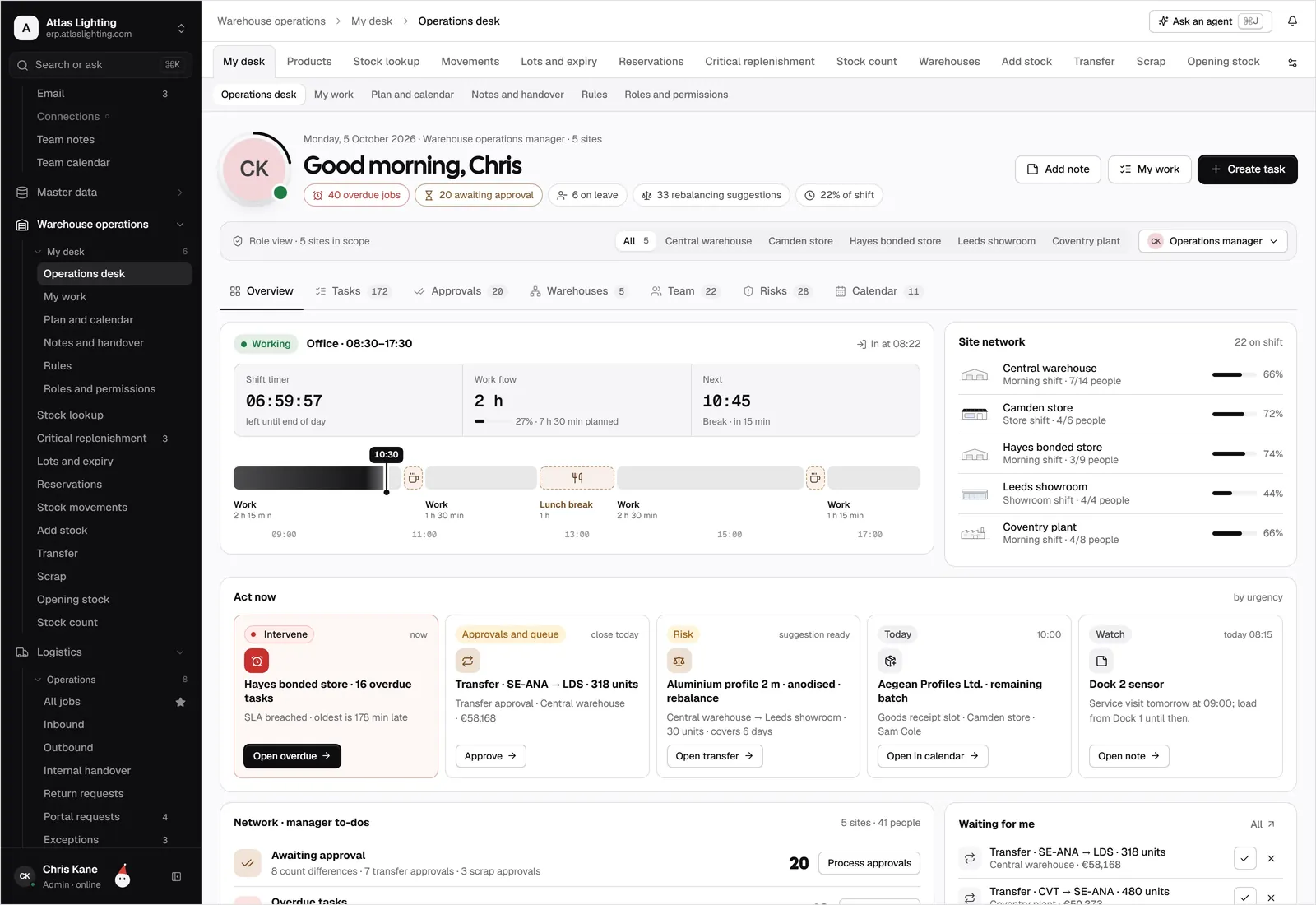
Spreadsheets can handle a small range, but they struggle once you have multiple warehouses, batches or channels. Inventory software can calculate reorder suggestions from live usage, reserve stock for confirmed orders and show what is on order from suppliers. Connecting stock to sales and purchasing means a shortfall can become a purchase request without anyone retyping it.
AI can take on some of the routine work, such as drafting replenishment orders or flagging items that are moving more slowly than expected. Any such assistant should work within defined permissions, and a person should approve the order before it goes out.
FAQ
What is the best inventory management method?
There is no single best method. ABC analysis is a good starting point because it shows where to focus, and reorder points are the most widely useful rule for replenishment. Most businesses combine several.
How often should I count stock?
It depends on value and risk. Count high-value or fast-moving items more often, perhaps weekly or monthly, and slow, low-value items less often. A regular cycle count beats one large annual count in most cases.
How do I calculate safety stock?
A simple approach is to take the difference between your maximum and average daily usage and lead time, then multiply them. More robust methods use statistical variation in demand. Start simple, then refine with real data.
Is FIFO required?
Not as a physical rule for all goods, but it is sensible for items that age or become obsolete. For perishable goods, FEFO is better. For accounting valuation, follow the guidance of your accountant.
Putting it into practice
Dika Ops is an AI-native ERP that connects inventory, purchasing and products so stock levels, supplier orders and sales stay in step. It is in closed beta, and you can join the waitlist to be considered for early access.